| home | company history | contemporary | paneling | kitchens | traditional | fitted furniture | contact |
|
|
A brief company history...
John Wood and Ernie Mott became friends shortly after leaving school, when they both started work for a local cabinet making establishment. Here they were engaged in the repair and restoration of antique furniture, and also the manufacture of high quality reproduction pieces. After serving their apprenticeships they continued their employment with the company, but around 1968, became increasingly convinced that they could succeed in business on their own.
Finding the premises to carry out the business presented the first hurdle, but they were fortunate in overcoming this. John`s parents owned a newsagent shop in Colchester, and below the shop was a cellar which was used only for storage of garden tools etc. They asked if they could use this, and after a little work improving the lighting and power outlets, they had obtained their workshop.
At that time the antique trade was buoyant, and there was sufficient work obtainable from local antique shops in and around the area. This, coupled with some delivery work for a local furniture store, provided them with a comfortable income for the first years. However, being still young and ambitious, they wanted to expand to more lucrative markets. The Chelsea area of London was a focus for the antique trade at the time, with the Kings Road and Fulham Road leading the way. It was to this area they aimed.
The Campaign style of furniture was extremely popular in the early 70`s, and to this pair of cabinet makers it presented an ideal opportunity. Buying old chests of drawers from the local sale rooms provided an abundant supply of cheap raw materials. A chest would be cut in half horizontally, centre boards fitted, and the two halves re-located using dowels. It was sometimes necessary to re-veneer a particularly worn chest, which was done almost exclusively in mahogany, but occasionally in yew. Brass straps and corners, suitably antiqued, would complete the making. All that was then required was to hide the new work with some skilled polishing. The popularity of these pieces was amazing and the demand was hard to keep up with. This was heightened when the retailers began to ask for pieces other than five drawer chests. The sale rooms were no use in this respect, so new materials had to be bought, and the reproduction phase began.
It had become impossible by this time to polish the furniture in same area that the cabinet making work was done. Even though only hand power tools were being used, there was too much dust for the two operations to be carried on together. To overcome this, a large shed had been built in the shop`s back garden for the polishing processes. But now, better machinery was needed for the new style of work, and somewhere to house it. A larger shed was built behind the first, and a covered area in which to house the board material.
John and Ernie now realised the work was more than they could cope with on their own. A relative was persuaded to become self employed to join them, and as the demand increased so did the workforce. Eventually there were four cabinet makers working in the cellar, with a polisher and a wood machinist in the sheds. By this time a couple of nearby lock-up garages were in use as timber stores, and lorries parked in the busy street, while a group of workers rushed back and forth with planks, had become a regular occurrence. It became obvious that the workplace was far from suitable.
The building of an industrial estate in neighbouring Brightlingsea, in the late 1970`s, provided the chance for a move. A large van was hired to move all the timber, benches, and smaller pieces of equipment, while a small, hired low-loader coped with the heavier machinery. The move was accomplished by the workforce themselves, and production hardly faltered. Over the years, as demand has dictated, extra factory units have been acquired or relinquished, but basically, Wood & Mott Ltd is still at the same address.
By the time of the move, the style of furniture had moved on considerably. The Campaign furniture revival had run its course, and the Georgian style was dominant. New pieces were constantly being introduced until there was a collection of around eighty different items counted as standard. A catalogue was produced, which was probably the biggest expense the company had encountered up to that time. There have been further updates since that first edition, but now, in the new millennium, the electronic media has lessened the need for a printed catalogue.
The quality of the furniture has kept the company`s pieces in demand, and word of mouth has seen the reputation become world wide. In the past, when the oil rich nations were looking outside their own country for furniture, Wood & Mott were sending teams of workers abroad to complete the fitting of special commissions. Germany and Holland were also keen customers until the economic state of Europe became a little de-stabilised at the time of unification. America has long been a devotee of English style furniture, and orders are regularly received from some of the leading retailers there. They are in fact today, the company`s largest purchasers of traditional, Georgian style furniture.
In this country, however, the influx of cheap furniture from such places as China, Viet Nam, and some Eastern Block countries, where labour costs are very low in relation to our own, has seen a decline in home based manufacturing. Even with the cost of shipping and the retailers profit added, the furniture sometimes costs less than it is possible to buy the materials for in Britain.
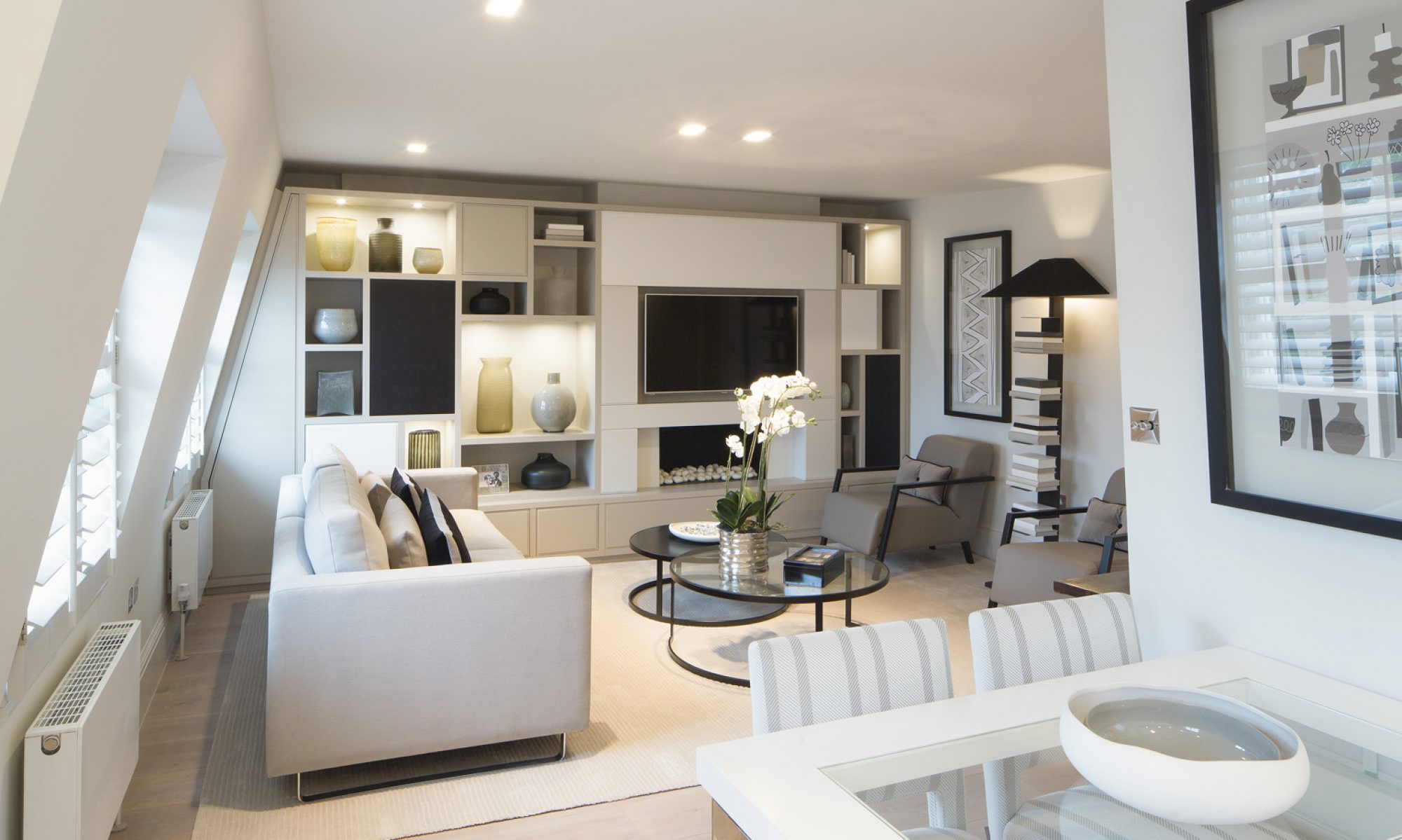
It was fortunate that before the decline had properly set in, Wood & Mott Ltd had branched out in a different direction. Over the years the company had, on a few occasions, been approached to make a special, bespoke piece. Some of the clients have been extremely high in the social order, and some extremely high in their own field, be it sport or finance. This side of the business has grown steadily in strength until now when it provides the lion`s share of the work. Interior designers working in many of the prestige developments in London frequently install furniture made to exacting standards by Wood & Mott Ltd.
This new style of work has seen huge changes from the traditional methods and materials used. The worlds concern for the conservation of rain-forests has seen a dramatic curve away from the use of mahogany, and as a result there are a good few little known timbers, as well as some more traditional home grown ones, which now grace our homes. Managed plantations which supply the timber in a sustainable manner are becoming more to the fore in the industry, but it is not only in types of timber that there has been change. The use of metal, and glass, especially mirrors, and even plastics, is now a frequent occurrence. This has guided the company into new territory in regard to the marriage of such materials in items of furniture.
The company is still headed by the founders, John and Ernie, but now the next generation is involved in the business. Keith Wood is playing a strong part in the company decision making, and will eventually be steering Wood & Mott Ltd, confidently, and competently into the future.
These are exciting times to be in the furniture business, and Wood & Mott has proved equal to all the challenges thrown at it. Whatever may be required, from a wall panelled room to a modern kitchen, or a sumptuous bedroom to a dignified library, the company has the experience and know-how to do the job.
|
![]()
|